
If you want your website to rank higher on Google, attract more traffic, and convert visitors into customers, then learning how to do on-page SEO is a must. On-page SEO focuses on optimizing elements on your website—content, meta tags, images, headings, URLs, and more—to help search engines understand your pages and rank them better.
This guide breaks down the entire process step-by-step in a simple and user-friendly way, allowing anyone to follow along.
What Is On-Page SEO?
On-page SEO is about optimizing every aspect of your website to enhance visibility and improve rankings in search engines. How It Differs from Off-Page SEO:
- On-Page SEO – changes you control on your site
- Off-Page SEO – external signals like backlinks and brand mentions
Why On-Page SEO Matters
SEO(Search Engine Optimization) needs clear signals to understand:
- What your content is about
- Whether it satisfies user intent
- If it deserves a higher ranking
With strong on-page optimization, you can outrank competitors even without a huge backlink profile.
Essential Factors of On-Page SEO
1. Keyword Optimization
Your content must focus on the right keywords that users are searching for. This helps search engines match your page to search queries.
2. Search Intent Alignment
Answer the question users have in mind when they type a keyword.
If intent is informational, provide helpful explanations.
If commercial, highlight benefits and CTAs.
3. Page Structure and Readability
Google loves content that’s:
- Easy to scan
- Clearly formatted
- Organized with headings
Users should not struggle to understand your page.
Step-by-Step On-Page SEO Process
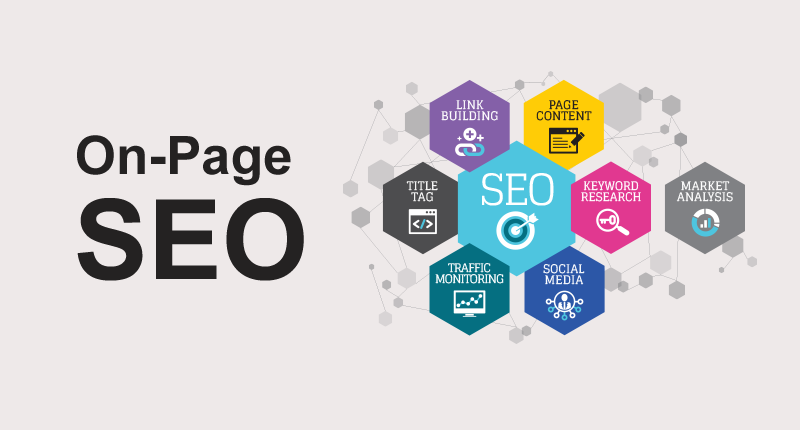
Step 1 – Perform Keyword Research
Types of Keywords
- Short-tail keywords (high volume, broad)
- Long-tail keywords (lower volume, targeted)
- LSI keywords (supporting phrases)
Tools for Finding Keywords
- Google Keyword Planner
- SEMrush
- Ahrefs
- Ubersuggest
- Google Autosuggest
Aim for keywords with decent search volume and realistic competition.
Step 2 – Optimize Title Tags
Your page title is one of the strongest ranking signals. Include:
- Include the main keyword once
- Keep under 60 characters
- Make it engaging, not just robotic
- Avoid stuffing multiple keywords
Example:
How to Do On-Page SEO (Beginner-Friendly Guide)
Step 3 – Write Compelling Meta Descriptions
Meta descriptions influence CTR (Click-Through Rate). What to Include
- Keyword once
- Benefits of reading
- Invitation to click
- Keep under 160 characters
Example:
Learn how to structure and optimize your website pages to get higher rankings and better user engagement.
Step 4 – Use Proper Heading Structure
Search engines read your content structure like a document outline.
H1, H2, H3 Explained
- H1 → Page title (used once)
- H2 → Section headings
- H3 & H4 → Sub-points under sections
Good structure improves readability and SEO.
Step 5 – Create High-Quality Content
Content is still the backbone of successful SEO. Importance of expertise and experience, Google now evaluates:
- First-hand knowledge
- Depth of explanation
- Helpful value
Improving User Engagement
- Bullet points
- Examples
- Comparisons
- Real insights
- Conversational writing
If people stay longer on your page, Google takes notice.
Step 6 – Optimize URL Structure
SEO-Friendly URL Tips
- Keep them short
- Use keywords
- Avoid symbols and numbers
Example:
example.com/on-page-seo-guide
Step 7 – Use Internal Linking
Internal links help search engines navigate your site.
Benefits of Internal Linking
- Distributes authority
- Helps pages get indexed faster
- Improves page session duration
- Guides users to related content
Example:
Link from “On-Page SEO Guide” to “Keyword Research Tips.”
Step 8 – Add Relevant External Links
External links help Google see your content as well-researched.
Credibility and Trust
Link to:
- Research studies
- Reputable websites
- Industry-leading resources
This improves content quality.
Step 9 – Image Optimization
Search engines cannot “see” images, but they can read associated metadata.
Alt Tags
Use simple descriptions that include context.
Example:
“On page SEO checklist displayed on a laptop screen.”
File Names & Compression
- Rename images using keywords
- Compress to improve page speed
Tools like TinyPNG or ShortPixel work great.
Step 10 – Improve Page Experience
Google ranks sites that provide a smooth experience.
Core Web Vitals
Focus on:
- Fast loading
- Quick interaction
- Stable layout
Mobile Optimization
With most searches on mobile, your site must:
- Be responsive
- Display correctly on all screens
Advanced On-Page SEO Techniques
1. Schema Markup
Schema is structured data that helps Google understand page content deeply.
Types include:
- Articles
- Recipes
- FAQs
- Local business info
2. User Behavior Signals
Google tracks:
- Time on page
- Click-through rate
- Bounce rate
Better signals = stronger ranking potential.
3. Content Freshness
Updating old posts:
- Boosts credibility
- Helps maintain rankings
- Signals ongoing relevance
Common On-Page SEO Mistakes to Avoid
Avoid the most frequent errors:
- Keyword stuffing
- Publishing thin content
- Ignoring user experience
- Missing or duplicated meta tags
- Blocking indexing accidentally
Tools to Help You with On-Page SEO
Free Tools
- Google Search Console
- Google Analytics
- Yoast SEO
- RankMath
Paid Tools
- Semrush
- Ahrefs
- SurferSEO
- Screaming Frog
These tools simplify auditing and optimization.
FAQs
1. What is On-Page SEO?
On-page SEO is the process of optimizing elements on your website to improve search engine rankings.
2. How long does On-Page SEO take to show results?
Most websites see improvements in 4–12 weeks, depending on competition and content strength.
3. Do keywords still matter?
Yes, but keyword quality, placement, and relevance matter more than raw frequency.
4. Is On-Page SEO better than Off-Page SEO?
Both are important. On-page builds a strong foundation, while off-page boosts domain authority.
5. How often should I update content?
Refresh important pages every 3–6 months to maintain relevance and performance.
Conclusion
Learning how to do on-page SEO doesn’t have to be complicated. With the right keyword research, optimized titles, strong internal linking, helpful content, and proper formatting, you can dramatically improve your search rankings and attract highly targeted organic traffic.
Consistency is the secret. Optimize each page step by step, track performance, and improve over time. Search engines reward sites that deliver value—and now you know to do exactly that.