
Understanding the difference between static and dynamic website is essential when building an online presence. Whether you are a business owner, developer, or student, choosing the right type of website affects performance, budget, maintenance, and long-term growth. Below is a clear and simple explanation of both, along with key differences, benefits, and uses.
What Is a Static Website?
A static website is made of fixed HTML, CSS, and sometimes JavaScript files. The content remains the same unless a developer manually updates the code. When a user visits the site, the server shows a pre-built page instantly.
Common Use Cases
- Portfolio websites
- Small business websites
- Landing pages
- Event or promotional pages
- Brochure-style websites
Advantages of Static Websites
- Fast loading speed
- Low development cost
- More secure due to no database
- Easy to host on any server
- Lightweight and stable
Limitations of Static Websites
- Not ideal for frequent updates
- No automatic content generation
- Harder to scale for complex features
- Limited user interaction
What Is a Dynamic Website?
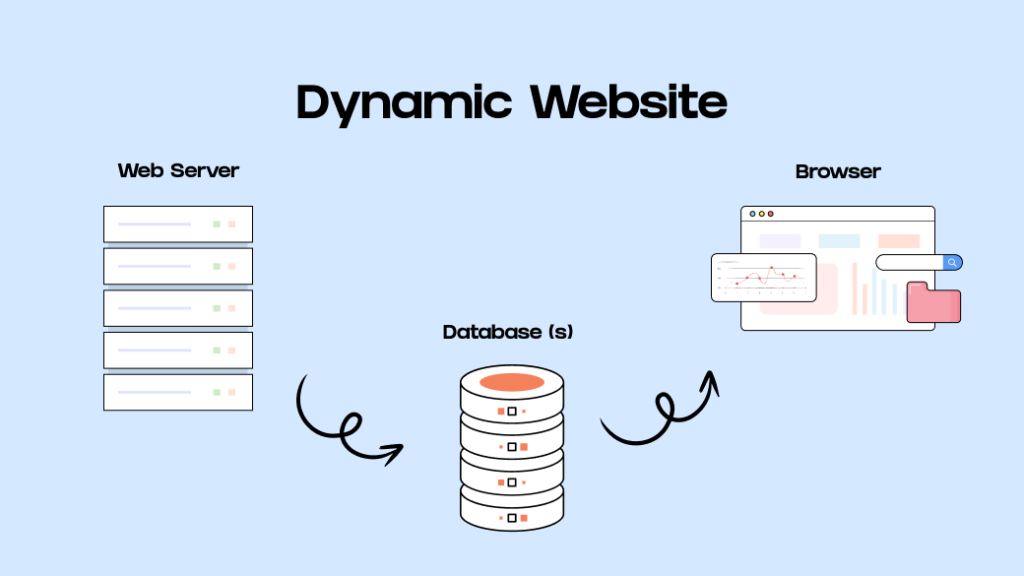
A dynamic website generates content based on user actions or database input. It utilizes languages such as PHP, Python, and Node.js, as well as frameworks like WordPress, Shopify, and Laravel. Each page is generated in real time.
Common Use Cases
- E-commerce stores
- News portals
- Social media platforms
- Membership websites
- Blogs with CMS
Advantages of Dynamic Websites
- Easy to update with a CMS
- Personalized content for users
- Highly interactive
- Supports complex functionalities
- Scalable for large businesses
Limitations of Dynamic Websites
- Slower load time compared to static
- More expensive to build
- Requires a secure server
- Advanced maintenance needed
Core Difference Between Static and Dynamic Website
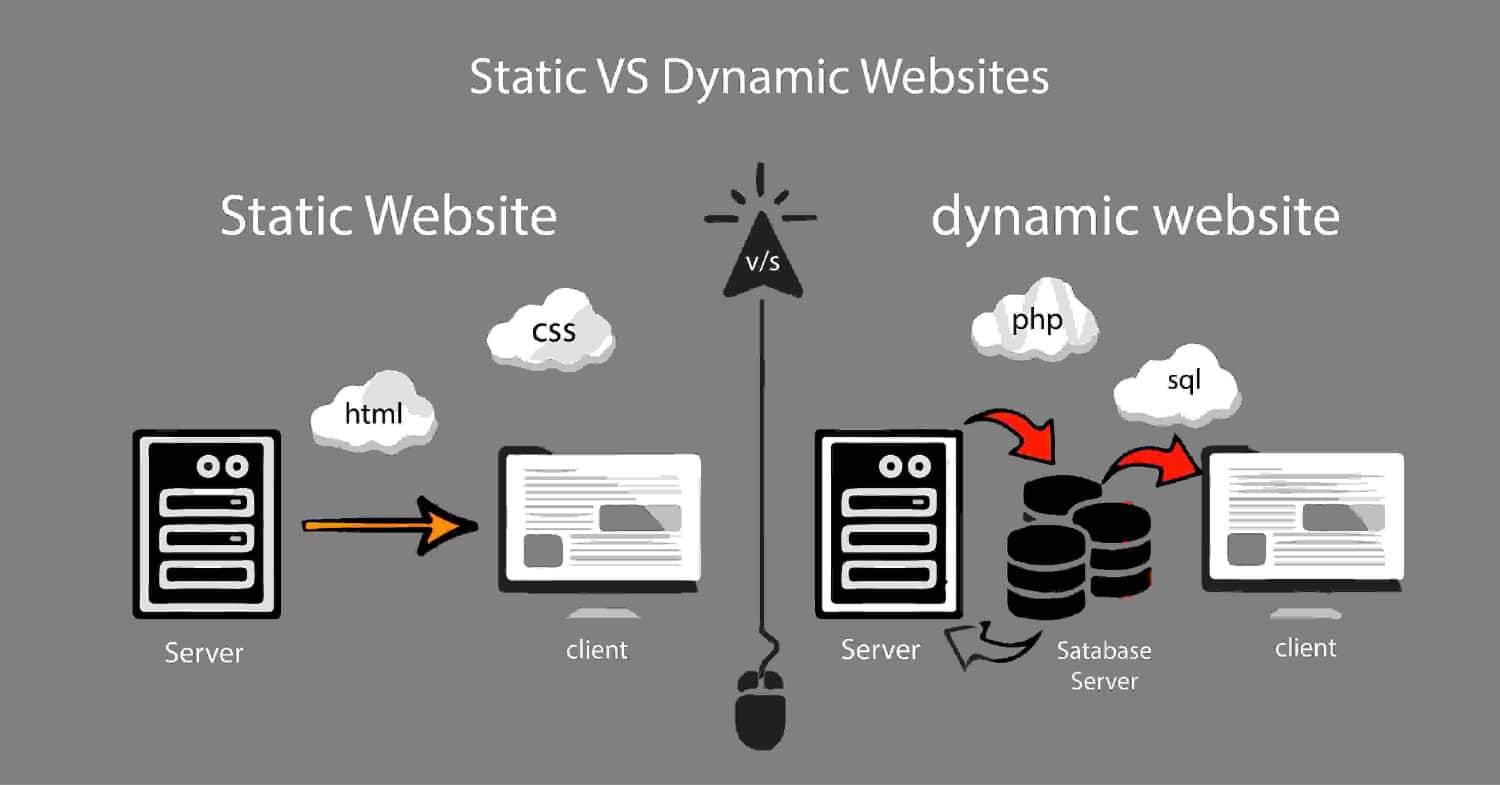
Here are the main points explaining the difference between static and dynamic website types:
1. Speed and Performance
Static websites load faster because pages are pre-built. Dynamic websites fetch data on the fly, which can slow performance unless the data is optimized.
2. Content Management
Static sites need manual updates. Dynamic sites use CMS platforms, making updates easy for non-technical users.
3. Cost of Development
Static = Lower cost
Dynamic = Higher cost due to database integration and features
4. Scalability
Static websites struggle with large-scale functionalities. Dynamic websites scale smoothly with advanced tools and integrations.
5. Security
Static websites have fewer vulnerabilities. Dynamic websites require strong security due to databases and admin dashboards.
Choosing the Right Website for Your Needs
Knowing the difference between static and dynamic website options helps you decide:
- For Small Businesses – Static websites are perfect for those needing a simple, affordable online presence.
- For Blogs and Content Websites – Dynamic websites using CMS like WordPress are ideal for regular publishing.
- For E-Commerce Stores – Only dynamic websites can handle carts, payments, and customer accounts.
- For Large Enterprises – Dynamic websites offer scalability, automation, and personalized user experience.
Which Type Is Better for Your Business?
Your choice depends on your needs:
- Choose a static website if you want a simple, fast, and low-cost site with minimal updates.
- Choose a dynamic website if you need frequent updates, user interaction, dashboards, or database-driven content.
Both have their own strengths, and understanding the difference between static and dynamic website types will help ensure smooth functionality and efficient performance.
FAQs
1. Which is better for SEO: static or dynamic websites?
Both can rank well, but dynamic websites offer easier content updates, which helps SEO.
2. Are static websites outdated?
No. Static websites are still great for speed and security.
3. Can a static website become dynamic later?
Yes, developers can upgrade it by adding CMS features, databases, or frameworks.
4. Which is cheaper to maintain?
Static websites are much cheaper because they don’t need special servers or databases.
5. What is the main difference between static and dynamic website in terms of security?
Static sites have fewer vulnerabilities, while dynamic sites require stronger security due to database interactions.
Conclusion
The difference between static and dynamic website comes down to how each one works, how they handle content, and what type of user experience they offer. Static sites are perfect for speed and simplicity, while dynamic sites are powerful for interactive, scalable online experiences. Understanding the difference between static and dynamic website options helps you choose the best type based on your goals, budget, and long-term growth plans. Build your perfect website today – contact us now!