
Website flipping has quietly become one of the smartest online income strategies. Whether you want side income or a full-time digital business, website flipping offers flexibility, scalability, and impressive returns when done right.
Imagine buying a rundown house, fixing it up, and selling it for a handsome profit. Now replace the house with a website—that’s website flipping in a nutshell. Instead of bricks and paint, you work with content, SEO, traffic, and monetization. Sounds interesting, right?
Let’s break it all down step by step so you can understand exactly how website flipping works and how you can profit from it.
What Is Website Flipping and How Does It Work?
Website flipping is the process of buying an existing website, improving its performance, and selling it for a higher price. The improvement can be anything from better content and SEO to increased revenue streams.
You don’t need to be a coding wizard. Many flippers focus on underperforming websites that already have traffic or potential. Once optimized, the value of the site increases—sometimes dramatically. Think of it as digital real estate. Buy low, add value, sell high.
Why Website Flipping Is a Profitable Online Business
Website flipping stands out because:
- Low startup costs compared to physical businesses
- High return on investment (ROI)
- Global buyer and seller market
- Assets can generate income while you own them
A website earning $200 per month can often be sold for $5,000–$8,000. Multiply that strategy across several websites, and you’re building serious digital assets.
Skills You Need to Succeed in Website Flipping
You don’t need everything on day one, but these skills help:
- Basic SEO understanding
- Content editing or outsourcing skills
- Analytics interpretation
- Monetization knowledge
- Negotiation and valuation skills
The good news? Most of these skills can be learned quickly through practice.
Understanding the Website Flipping Process
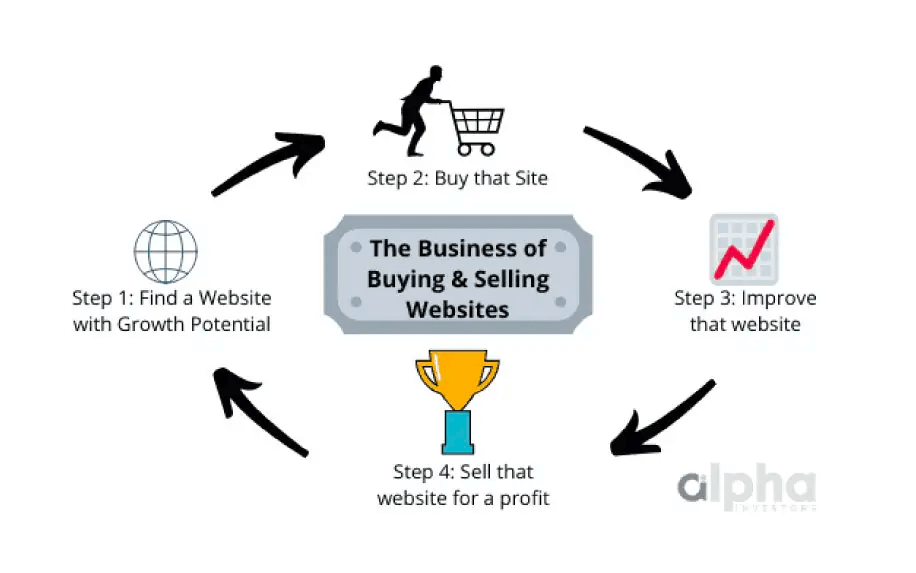
The process usually follows these steps:
1. Find a Website to Buy
You can find websites on marketplaces like Flippa, Empire Flippers, or Motion Invest. However, always check:
- Monthly traffic
- Revenue proof
- SEO performance
- Backlink profile
- Niche demand
Due diligence is very important before purchasing.
2. Improve the Website
After buying, focus on increasing value. For example:
- Improve content quality
- Optimize SEO
- Fix technical errors
- Increase website speed
- Add better monetization methods
- Improve user experience
As a result, the website becomes more attractive to buyers.
3. Increase Revenue
Revenue growth increases valuation. You can:
- Add display ads
- Use affiliate marketing
- Sell digital products
- Offer services
- Improve conversion rate
Even small revenue improvements can significantly increase the selling price.
4. Sell the Website
Most websites sell for 25x–40x of monthly profit. For example, if a website earns $1,000 per month, you may sell it for $25,000–$40,000, depending on stability and growth. The stronger the traffic and revenue history, the higher the valuation.
How to Choose the Right Website
Not every website is a good investment. Therefore, look for:
- Evergreen niche
- Organic traffic (not paid traffic)
- Stable income history
- Low competition keywords
- Growth opportunities
Avoid websites with fake traffic, copied content, or heavy dependence on one traffic source.
Where to Buy Websites for Flipping
Website Marketplaces
Popular marketplaces list thousands of websites across niches and price ranges. These platforms usually provide traffic and revenue data to help buyers make informed decisions.
Direct Outreach Opportunities
Some of the best deals never hit marketplaces. Reaching out directly to site owners can land undervalued assets at better prices.
How to Evaluate a Website Before Buying

- Traffic Analysis
Look for consistent, organic traffic. Avoid websites with sudden spikes or unexplained drops.
- Revenue Verification
Always verify income sources. Screenshots, access to accounts, and payment proofs matter.
- SEO Health Check
Check backlinks, keyword rankings, and penalties. A clean SEO profile equals a safer investment.
- Content Quality Review
Low-quality content is easier to fix than no content at all. Assess effort vs reward.
Common Types of Websites for Flipping
- Content Websites – Blogs and niche sites are monetized through ads or affiliates.
- Affiliate Websites – Sites earn commissions from product recommendations.
- E-commerce Websites – Online stores with physical or digital products.
- Service-Based Websites – Lead generation sites for local or online services.
How to Improve a Website for Higher Value
- SEO Optimization – Fix technical issues, improve on-page SEO, and build quality backlinks.
- Content Upgrades – Refresh outdated posts, add new content, and improve readability.
- Monetization Improvements – Add better affiliate offers, optimize ad placements, or introduce new income streams.
- Design and UX Enhancements – A clean, fast, and user-friendly design increases trust—and value.
How Long Should You Hold a Website Before Selling?
Most flippers hold websites between 6 and 18 months. Enough time to show growth, but not so long that momentum stalls. Most websites sell for 25x–45x monthly profit depending on:
- Stability
- Growth
- Traffic sources
- Niche
Higher stability equals higher multiple.
Where to Sell Websites for Profit
You can sell websites on:
- Online marketplaces
- Private buyer networks
- Direct outreach to investors
Presentation matters. Clear data and growth proof sell faster.
Risks of Website Flipping
Website flipping isn’t risk-free, but risks can be minimized by:
- Diversifying income sources
- Avoiding black-hat SEO
- Buying established sites
- Keeping documentation
Smart decisions reduce surprises.
Is Website Flipping Good for Beginners?
Yes, beginners can start small. For instance, you can buy a low-cost website, improve content, increase traffic, and sell it within 6–12 months. Start with smaller projects. Then, gain experience before investing larger amounts. It’s one of the most beginner-friendly online business models when approached carefully.
Unlike dropshipping or freelancing, website flipping creates sellable assets. You’re not just earning—you’re building equity. As online businesses grow, demand for profitable websites will only increase. Website flipping isn’t fading—it’s evolving.
FAQs
1. What is Website Flipping?
Website flipping is the process of buying a website, improving its performance, and selling it for profit.
2. How much money do I need to start website flipping?
You can start with a few hundred dollars, depending on the website you purchase.
3. How long does it take to flip a website?
Typically, 6–12 months. However, some flips happen faster if improvements show quick results.
4. Is website flipping risky?
Yes, but careful research, proper SEO, and smart monetization reduce the risks.
5. How do websites get valued?
Most websites sell for 25x–40x of their average monthly profit.
Final Thoughts
Website Flipping is a smart way to build online income by buying, improving, and selling websites for profit. With the right research, SEO optimization, strategies, and monetization methods, you can turn websites into valuable digital assets.
Start small, focus on value improvement, and think long term. Over time, website flipping can become a powerful online business model.